
By Russell Grigg
This article explores the case of Mary Prout, from Amroth, around the 150th anniversary of her conviction for the murder of her baby daughter. Mary’s story has wider significance in illustrating many of the key themes that concerned nineteenth-century observers: the costs of maintaining bastard children, the loose sexual behaviour of young female servants and the need to preserve the Victorian domestic ideal. Undoubtedly local historians can unearth similar cases to Mary in different parts of the United Kingdom, given the widespread reporting of infanticide in regional newspapers. However, Mary’s case is less common in that she was sentenced to death, but following a petition for mercy this was commuted to twenty years’ imprisonment. She eventually returned to her home county and possibly married the father of her child, nineteen years after she was killed.
Introduction
In 1864 a young woman called Mary Prout left Narberth workhouse and set off on her eight mile journey to her grandmother’s house in the village of Amroth, carrying Rhoda, her new-born baby. As she trudged along a footpath she stopped to feed the baby and pass the time of day with two neighbours, who later commented upon her troubled appearance. Like many young women in mid-Victorian society, Mary was illiterate, poor and single. Before she reached her grandmother’s house, Mary took the fatal decision to throw Rhoda down a disused mineshaft. Later she explained to her grandmother that the baby had died in the workhouse. However, the following day neighbours aroused suspicion and Mary was arrested at her sister’s home. She was subsequently charged and convicted of the wilful murder of her newborn baby, a crime that carried the death sentence.
In the modern age when nearly one in two children are born out of wedlock in the United Kingdom, it is difficult to imagine the stigma associated with illegitimacy prior to the changes in social mores during the 1960s. Older generations recall the gossip linked to the birth of an illegitimate child. This was especially the case in the Bible-based Welsh communities of the nineteenth and early twentieth centuries. Henry Richard (1812-1888), Member of Parliament for Merthyr Tydfil and Welsh nonconformist leader, was at pains to defend his countrymen and women from ‘unclean exaggerations’ and claims that illegitimacy was the ‘peculiar vice of the Principality.’ However, many social commentators disagreed. The Archdeacon of St David’s declared in the 1860s that ‘bastardy was common, unchastity (sic)…the rule among farmhouse servants in South Wales.’ The Welsh custom of bundling, where farm servants courted in bed, was widely criticized late into the nineteenth century for encouraging fornication. Others attributed the high levels of illegitimacy in rural Wales to the practice of farm servants of both sexes attending prayer meetings together, after which they paired off and became intimately acquainted. But there were sins considered to be more serious than extra-marital sexual relations and illegitimacy. It was one thing to have a bastard child, but quite another to destroy it.
Mary Prout’s background
Mary Prout was born on 12 January 1843 in the small Pembrokeshire village of Amroth. She entered the world during a turbulent period in Welsh history. Mid nineteenth-century Pembrokeshire, like all Welsh counties, experienced significant social and economic changes. These included: the relative decline of agriculture and the expansion of the coal industry, a ‘rural exodus’ of young people to the towns, the growth of nonconformity, the beginnings of reforms to the employment of women and children, extended educational opportunities, the introduction of the railways, and a gradual erosion of the labouring poor’s deferential attitudes towards their employers.
As a child, Mary Prout’s prospects of a long contended life were slim. In 1851 life expectancy at birth was 41 in England and Wales. However she survived her first birthday, a key milestone by when around 15 per cent of all babies died. Once the dangers of infancy were negotiated, infectious diseases such as cholera, typhoid and tuberculosis claimed many young victims including Mary’s siblings. She was one of ten children, placing considerable strain on the family’s day-to-day existence. A combination of unhygienic living conditions, poor diet and patterns of infant care, all contributed to a high infant mortality rate that did not begin to fall significantly until the last quarter of the nineteenth century. More generally, the social and economic conditions of the rural poor were demanding especially in ‘the hungry forties’. Evidence submitted to a government inquiry in 1843 revealed that some parishioners were so poor that they were obliged to give up their smallholdings and enter the workhouse rather than live as they were.

Map courtesy of the late Roscoe Howells
Mary was brought up in very humble surroundings, living with her family in a type of cottage known as a Pembrokeshire clom (the word ‘clom’ is Norse for ‘dirt’) – a very basic single story building without indoor sanitation, proper ventilation and where residents often slept together. Her father was a coalminer working at one of the several pits in the district, responsible for producing the best anthracite coal in the world. Mary’s father may have participated in the local strike action that occurred in 1859 over low wages, while feelings of unrest continued through the 1860s and 70s.
In the early and mid Victorian years, it was commonly expected that children would contribute to the family income from a young age. The 1851 Census records that Mary’s 12-year-old brother, Thomas, was a coalminer. William Prout, Mary’s 12-year-old uncle, and her aunt Elizabeth gave evidence to the Parliamentary inquiry into the employment of children in 1842, as follows:
Began to work when eight years old at skip-hauling, work 8 hours and longer daily, was born in Amroth parish. Never go to church or chapel, cannot read at all, have never been to school. Earn 3s. 6d. a week; work with father, but paid by masters; give money to father. Never got hurt.
William Prout
Began work at 11 years of age; work as others work; and the usual hours; the more we draw the more we earn; 1 get 4s 6d. a week; I go regularly to Chapel, but cannot read or write; sister (Ann Prout), who is nearly 18 years of age, winds at the windlass below, she can earn 4s also, we take the money home, sister reads a little.
Elizabeth Prout
In total, twenty-three children under the age of 13 were employed at the local Kilgetty colliery, thirteen boys and ten girls, out of a workforce of 128. The reporting commissioner, R.H. Franks, was disturbed at the findings. There were cases of children as young as six working underground, opening and shutting doors to allow the circulation of air, although girls tended to start later than boys. The local surgeon recommended that children under 15 should not enter the pits, given the negative impact on their health. He estimated that the average life expectancy was around 40 years.
We know very little about Mary’s childhood and youth. In the 1840s there was one school in Amroth, established in 1789 as a charitable venture attached to the church. But it is not known whether any of Mary’s siblings were among the thirty or so pupils who typically attended. Most of the pupils only stayed for a year or so to learn how to read, write and add up. Mary was not one of them. She was one of many illiterate children and young people, based on the fact that she entered a cross when the birth of her daughter was registered at the workhouse. Although Mary is listed as a ‘scholar’ in the 1851 Census, this did not necessarily mean that she attended school. Enumerators used the term liberally to describe children of schooling age. Little is known about Mary’s employment. For a short time she worked as a servant for a Tenby grocer and in May 1863, she was convicted of stealing £1 2s. 6d. She was sentenced to six weeks hard labour at the House of Correction in Haverfordwest. She picked up further employment as a servant in Saundersfoot, after completing her sentence.
But by the autumn of 1863, Mary found herself pregnant. The reaction of her family to such news is unknown but sympathy is likely to have been in short supply. Mary’s mother had died two years earlier at the age of 49 from dropsy and it seems that she was not on good terms with her grandmother even though she set off for her house on the fateful evening. Her father was a strong Primitive Methodist and had remarried –neither he nor his new wife was called to give evidence later at Mary’s trial.
Having been turned out of her employment and without a marriage mate, the most common resort for those in Mary’s position was to keep the child and seek support from family and friends or pursue a criminal path through suicide, abortion, abandonment or destruction. It was also possible to ‘farm out’ the child to a wet-nurse, ‘midwife’ or what was later described as a baby farmer. There were no foundling hospitals in Wales. A few servants were bold enough to attempt birth in secret while still in their employer’s house. For instance, Elizabeth Sumon, a young cook at a Swansea hotel, shared a bed with another female servant. On the night of the birth, she awoke shivering but delivered on the floor having taken some brandy to ease the pain. She disposed of the baby in a local park before resuming her duties. Many servants, however, were unable or unwilling to disguise their pregnancy and having lost their job had little choice but to head home or seek respite in the local workhouse.
Entering the workhouse
Mary was admitted on 12 February 1864 to Narberth workhouse and on 9 April was delivered of a baby girl, Rhoda, who she named after her seven-year-old sister who had died a few weeks before. Workhouses were not popular in nineteenth- century Wales. They had become symbols of the hated new Poor Law legislation, introduced in 1834. The Act stipulated that those who could not provide for themselves were detained in workhouses where conditions were meant to be worse than the lowest paid labourer outside. It was one thing to go to a parish officer for temporary relief, but it was quite another to be forced to enter a workhouse. An angry mob attempted to burn down the Narberth workhouse in 1839, before it was completed. It was attacked again in 1843, as part of the protest movement known as the Rebecca riots. The rioters protested against the general economic conditions in the countryside, including the payment of tithes to the Church, transport tolls and rates to support the workhouse, at a time when money was tight. But they also voiced their outrage at the Poor Law legislation.
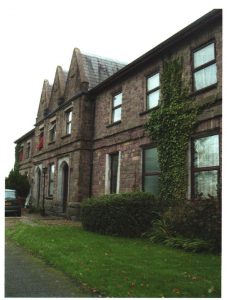
Narberth Workhouse, 2013
One of the most controversial aspects of the 1834 Act was the ‘bastardy clause’. This put the onus on the mother of an illegitimate child to prove paternity and, if she was not able to do so, then the mother assumed sole respons- ibility until the child reached the age of sixteen. If mothers were unable to support themselves and their offspring, they would have to enter the workhouse. The intention of the 1834 Act was to deter women from risking extra-marital pregnancy by making the consequences seriously. Prior to the 1834 Act it was the customary for men to marry women once it was known that they were pregnant. Two of Mary Prout’s neighbours, in giving evidence to a parliamentary inquiry into the Rebecca riots in 1843, highlighted the injustices surrounding the 1834 legislation. One made it clear that all in the parish ‘concur in the desire to get rid of the bastardy clause.’ Another Pembrokeshire witness declared:
I think in nine cases out of ten, during the old law, they married; and I think in thirteen cases out of fifteen they (the young men) do not marry now.
Other locals, as members of the Rebecca riots movement (1839-1843), exerted their own influences on putative fathers. In one instance a farmer in the vicinity of Narberth received a threatening letter from Rebecca ordering him to support the child of a female servant, but in this case the farmer informed the authorities which led to the arrest of the servant and a local teacher – the mother was sentenced to six months’ hard labour and the teacher received four months’ imprisonment. Subsequent legislation softened the process by allowing an unmarried mother to apply for an affiliation order against the father for maintenance of her and the child, regardless of whether she was in receipt of poor relief. But it was not until 1872 that the Bastardy laws were reformed so that fathers shared equal responsibility for supporting their illegitimate offspring.
Workhouses were effectively the last resort for mothers and their illegitimate children – census figures reveal that a third of the inmates at Narberth in 1851 were bastard children; by 1861 this had increased to more than 50 per cent (36 out of 69). The youngest child was a two-month old abandoned baby who was allocated the name Morris Marloes (after the village of Marloes). One nurse looked after the children. Local historian Roscoe Howells describes the ‘hellish conditions’ of the Narberth workhouse at the time. Revisionist historians offer a more tempered view, pointing out for instance that the workhouses arguably saved thousands of people from starvation. Inmates received shelter, basic food and care, there were occasional treats and comforts (often supplied by the local gentry), Mary had unrestricted access to her baby and she was not alone; for instance, she befriended another single mother Hester (or Esther, depending upon the sources) Thomas. During the trial proceedings it emerged that Hester had made a child’s bonnet as a gift for Mary. However, there were also appalling incidents of neglect and brutality in some workhouses, including child abuse, as highlighted by Peter Higginbotham’s authoritative website The regimes of workhouses, like schools and prisons, were based on institutional discipline and scrutiny. (http://www.workhouses.org.uk/education/).
The fatal decision
On the evening of the 20 May 1864, Mary left the workhouse to stay with her grandmother, Ann Prout. On her journey Mary stopped to feed Rhoda under a hedge and spoke briefly to Hannah Davies, the wife of a coalminer who later retrieved the baby’s body, and her daughter. It is not known whether Mary then visited the house of Susan Ebsworth, a relative and almswoman who charged for nursing children. Howells points out that the local topography meant that Mary would have passed one disused coal mine on her route home and at that point evidently did not feel the urge to dispose of her baby, suggesting that her actions may not have been premeditated. But when she passed a second opening known as the Little Pit she threw Rhoda down the 26 feet.
Upon arriving at her grandmother’s house she explained that the baby had died in the workhouse. Ann responded: ‘Go down on your knees, Mary, and give thanks to the Lord that he took it.’ The sudden disappearance of the baby gave rise to gossip and it’s likely that Hannah Davies informed the police. A local search located the body and showed that the baby had died from a fractured skull. Mary was arrested the following morning on suspicion of wilful murder. En route to the police station, Mary told the superintendent: ‘If they hang me I will tell the truth. I threw it in and ran away a short distance. I then returned and found there was no noise; not hearing any I went away to my grandmother’s’. The charge sheet described Mary’s character as ‘indifferent’.
The Trial
At the trial, Mary Prout pleaded ‘not guilty’. Her lawyer defended Mary on the grounds that the baby had suffered from ‘red gum’ disease and that this could have caused convulsions that led to her death prior to her being thrown down the disused pit. He added that Mary was not of sound mind and was therefore not responsible for her actions. It was also the case that while Mary was in the workhouse, she had 12 hours leave to collect clothes for the baby from her grandmother’s home. The act of preparing clothing was taken to imply that the baby was wanted and there was no deliberate intent on the part of the accused to commit murder. Several witnesses spoke in support of Mary’s character. Martha Williams, matron at the workhouse, said that she was ‘very civil’, while a local doctor who carried out the autopsy and who knew her as a servant in the house he lodged, described Mary as ‘quiet, easy and a good natured girl ’. The grandmother testified to Mary’s fondness for Rhoda. She also drew attention to a history of ‘peculiarities’ within the family. In particular her sister-in-law ran around naked and they were forced to tie her hands behind her back ‘for weeks’, while a great aunt (also called Mary Prout) climbed ladders to frighten people and was eventually committed to Haverfordwest gaol as a lunatic. Despite these comments, the examining doctor reported no evidence of ‘disease of mind’ that prevented Mary from knowing right from wrong.
The jury deliberated for an hour before returning a verdict of guilty but added that the act was not premeditated but done on the spur of the moment. Mary Prout’s case was reasonably straightforward for the jury. But acquittals were common. It is estimated that only around 40 per cent of the accused were tried and found guilty under the terms of the original indictment. Welsh juries were well known for their leniency, humorously epitomized by one foreman of the jury who declared, when asked for his verdict, ‘Not guilty, my lord, but he must not do it again.’ Juries often returned the lower charge of concealment rather than murder. Philpin, who has examined criminal records and newspapers in Pembrokeshire, suggests there were strong feelings against capital punishment in the county. In Mary’s case, the jury also called for mercy on the grounds of insanity within the family. The sentencing was adjourned to the following day when Charles Crompton, the judge, concluded that Mary knew what she was doing and that a warning was needed to young women not to ‘yield to their passions and give their virtue to manhood.’ He added that in such circumstances men who seduce young women always forsake them and ‘consign them to dreadful misery.’ Stephen Walcott, the assistant Poor Law commissioner for north Wales, noted that ‘few offend twice’ and believed that in most cases mothers had been deceived by the promise of marriage. He added that the Welsh people showed humanity in responding to the unmarried mother. Nonetheless, Mary was found guilty of wilful murder and the judge sentenced her to be executed and to be buried within the grounds of the gaol. The hanging was to take place in public. It was not until 1868 that the government put an end to the grotesque spectacle of public hangings. While she awaited her fate, Mary was detained in prison scarcely able to eat.
Reactions
Mary Prout’s case resulted in widespread sympathy. The local vicar rallied support – he had known Mary since baptizing her 22 years earlier. Within a week of the sentence, 1,120 names had been collected and given to the High Sheriff to petition the Home Secretary for mercy. Petitions, held in the National Archives, are an important but relatively neglected source for local historians in providing unique contextual information about individuals and their communities. Hunter draws on petitions in a similar case study of Sarah Ann Hill, from Wakefield (Yorkshire), who in December 1851 was convicted of murdering her newborn child and sentenced to death. In Hill’s case, the presiding judge offered no grounds for clemency although she had support from prominent members of the community. The petition in Mary’s case, dated 18 July 1864, was delivered when Mary was detained in Woking prison. It stated that Mary was ‘very sorry for what she had done to think that she was so weak minded to be overcome with jealousy so strong.’
The trial judge accepted that an execution would mean that juries in future would be reluctant to pass ‘proper verdicts’ in similar cases. He supported a plea for the death sentence to be commuted. In the official correspondence kept at the National Archives, George Grey, the Secretary of State for the Home Department, cited the fact that insanity was known in her family and on this basis he supported the commuting of the sentence to twenty years’ imprisonment. One relative, also called Mary Prout, had been detained as a ‘dangerous lunatic’ in the House of Correction at Haverfordwest in 1818 and then to the gaol in 1822. She also bore an illegitimate child and a bastardy order was made against a local farmer.
In the case of Sarah Hill, the local press opposed the death penalty, supported calls for mercy and criticised those ‘flying stationers’ who sold thousands of copies of Sarah’s ‘final words and confession’ on the streets of York on the morning of her supposed execution. Similarly, William Lewis, the editor of the Haverfordwest and Milford Haven Telegraph, was a leading local opponent to the inhumane death penalty. He published a letter from an anonymous Christian condemning the reprieve but through his editorial condemned those ‘women delicately and well nurtured, and whose moral and religious training have not been altogether neglected, who regret that a woman is not to be hung like a dog.’ Following the petition and the judge’s call for clemency, Mary Prout was reprieved by Queen’s consent.
Mary in later life
Mary served her sentence in various London prisons. In 1874 she made a plea for mitigation of sentence, having served ten years, claiming that she was very sorry for what she had done and that she was ‘overcome with jealousy’. The subject of such jealousy – the baby, the father, or another woman in more favourable circumstances – is unknown. In 1877, because of her good conduct, she was granted a conditional license to stay at the Carlisle Memorial (Battery House) Refuge in Winchester, set up by the prison reformer the Earl of Carlisle. The government paid for female prisoners to be detained for a period of 9 months where they could earn around 10 shillings a week. The refuge was effectively a stepping-stone to ‘outside’ employment. Mary was released on 23 May 1878, ironically the same day she murdered her daughter 14 years earlier. She returned to Pembrokeshire and by 1881 she had found employment as a servant in Tenby. She married a farmer (James Rees) in 1883 and had two more children, John and Mary. There has been much speculation as to why Mary returned to Pembrokeshire when she had sisters in Durham and Jersey. One slant is that in 1863, when the nineteen-year-old Mary conceived, the 43-year-old James Rees lived in Saundersfoot and could have been the father, but was married at the time. He went on to marry Mary nineteen years later, six years after the death of his first wife. Mary re-appears in the historical record in London, following the death of her husband. Evidently she had gone to London to be with her two grown-up children, who worked as a waiter and waitress.
Remembering Mary
Mary Prout was one of many young women convicted of a crime that continues to evoke mixed feelings of anger, empathy and intrigue. There has been a longstanding debate over whether women such as Mary should be pitied or punished. In mid-Victorian Wales and Britain, many saw the perpetrators as victims in an age even before the impact of post-natal depression was understood. Developments in modern-day psychiatry and mental health have meant that it is very rare for a woman to receive a custodial sentence for killing her newborn child. The Infanticide Acts of 1922 and 1938 placed infanticide as a separate offence of manslaughter rather than murder. The 1938 Act defined infanticide as ‘any wilful act or omission on the part of the mother which caused the death of her child under the age of twelve months, while the balance of her mind was disturbed by reason of her not having fully recovered from the effect of giving birth to the child or by reason of the effect of lactation.’ This remains the basis of legislation today.
So how should Mary Prout be remembered, 150 years or so from her conviction? To what extent is it appropriate to consider her a victim of her circumstances, to be pitied rather than condemned as a murderer? Occasionally female child-murderers were portrayed as evil, but more often they were seen as objects of pity as in the case of Mary Prout. They attracted far more sympathy than fathers who were convicted of crimes most frequently described as child murder rather than infanticide. The difference in terminology highlights ideological concerns regarding masculinity, feminine virtue and paternal responsibility. In modern times, sympathy for the likes of Mary Prout has been sustained. Humanitarian narratives ironically obscure the actual crimes (some of which were brutal) and often ignore the immediate victims, the children themselves. The folk singer Tom Bliss has composed a ballad sympathetic to Mary’s plight in which she had to deal with many pressures, including the harshness of her father:
When I heard the word from Saundersfoot, that my Mary was with child
But refused to say who lay with her, I felt my name defiled
Thank God her Mother never lived, to suffer her daughter’s sin
No, the Holy Bible is my law, I could not take her in
How could I ever take her in?
In reality, so much remains unknown about Mary’s case and others like her, although there is promising research on many aspects of infanticide including the gender, social class and mental health of the accused. Local studies examining sources such as petty and quarter session records, newspapers, police diaries and gaol registers may shed light on possible regional variations in attitudes towards the main protagonists. From a Welsh perspective, there are questions associated with the kind of social and religious influences exerted by the chapels and churches on how women were expected to behave, particularly in tight-knit rural communities. Still, we do not know enough about the feelings of those involved and the emotional pressures women such as Mary faced. It is very difficult for historians to trace the voices of those indicted that are often filtered, at best, through third-person accounts or confessional remarks. At the same time Mary Prout was convicted, another domestic servant, 24-year-old Sarah Butler, was cleared of concealing the birth of her baby and secretly disposing of the body in a neighbouring parish. Mary Davies, a 28-year-old servant, was also cleared of abandoning her two-year-old child. How did these families react? What were the views of older women in the respective communities? The particular role of the father needs to be examined. We also know little about the relationships between servants who fell pregnant and their employees. We also need to find out more about contemporary medical opinion, folklore and beliefs surrounding pregnancy and childbirth. Questions need to be asked about the legal process, how different judges interpreted the law and attitudes towards offenders in prison and upon release.
Mary Prout, is buried in St Elidyr Church, Amroth. Her memorial stone, erected by her two surviving children, reads:
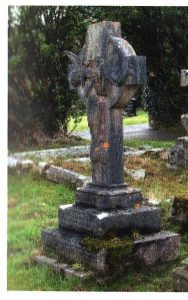
Mary Rees, late of Saundersfoot, who passed away in London. Dear mother, thy work is o’er. Thy loving hands shall toil no more. No more thy gentle eyes shall weep. Rest, dear Mother, gently sleep. Erected by her sorrowing children.
As for her baby daughter, Rhoda, she is buried in the same graveyard as her mother but in an unmarked grave.
NOTES
- The most detailed account of Mary Prout is provided by R.G. Brawn, The Trial of Mary Prout, Milford Haven (privately published in 2008, available at Pembrokeshire Record Office). See also B. Phillips, The Lovers Graves: 6 True Stories that Shocked Wales, (Gomer, 2007); and Wales on Sunday, 7 April 1991.
- S. Swinford, ‘Most children will be born out of wedlock by 2016’, The Telegraph, 10 July 2013.
- H. Richard, Letters on the Social and Political Condition of the Principality of Wales, (Jackson, Walford and Hodder, 1867), p.56. Richard’s view that the influence of nonconformity had reduced serious crime figures in Wales from about the 1860s onwards had widespread contemporary support. However, modern social and economic historians point towards general improvements in living standards and education as major factors. See Y.R. Wong, ‘An Economic Analysis of the Crime Rate in England and Wales, 1857-92’, in Economica, New Series, Vol. 62, No. 246 (May, 1995), pp. 235-246. Petty crime increased following the passing of the Summary Jurisdiction Act of 1879 that placed most erstwhile indictable crime in the lower courts.
- Cited by P. Horn, The Rise and Fall of the Victorian Servant, (St Martin’s Press, 1975), p.136.
- D. Howell, ‘The agricultural labourer in nineteenth-century Wales’ in Welsh History Review, 6 (3), 1973, pp.262-287.
- M. Daunton, Wealth and Welfare. An Economic and Social History of Britain 1851-1951, (Oxford University Press, 1991), p.351.
- A Philpin, ‘Women and Crime in Pembrokeshire in the Nineteenth Century’, unpublished M. Phil dissertation (University College of Swansea, 1991), p.34.
- Interviews with 446 and 451. British Parliamentary Papers. Children’s Employment Commission Appendix to First Report of Commissioners Mines Part II, 1842, p.579.
- British Parliamentary Papers, Reports of the Commission on the State of Education in Wales, XXVII, Part 1, 1847, pp.114-115.
- Due in particular to the efforts of the Circulating school movement led by Griffith Jones, around 50 per cent of the Welsh population was literate by the early 1800s. Literacy levels increased with the spread of schools and working-men’s institutes. By the 1850s around 70 per cent of men and 59 per cent of women could sign their names in the marriage register, rising to 97 per cent by 1900. See W.B. Stephens, Education, Literacy and Society, Manchester University Press, 1987); D. Mitch, The Rise of Popular Literacy in Victorian England, (University of Pennsylvania Press, 1992).
- Tenby and Pembroke Observer, 14 May 1863.
- The term ‘baby-farming’ was first introduced in 1867 by the British Medical Journal to describe a situation in which a woman handed her four children over to a hired nurse, in the knowledge that they would be neglected and subsequently die.
- Arguments were put forward that placing a child in a foundling hospital was an immoral act, rescuing children from one kind of death only to expose them to another. See Monmouthshire Central Advertiser, 19 August 1865.
- Cardiff Times, 25 June 1898.
- Cited by A. Philpin, A. ‘Crime and Protest, 1815-1974’, Howells, D. ed. Pembrokeshire County History, Vol. IV, (Pembrokeshire Historical Society, 1993), p.320.
- British Parliamentary Papers, Report of the Commissioners of Inquiry for South Wales, XIX, 1844, p.81.
- Philpin, p.320.
- R. Howells, From Amroth to Utah, Llandysul: (Gomer Press, 2001) p.45.
- C. Hodgman, ‘The rise and fall of the workhouse’, 20 December 2010, BBC History Extra, available at: http://www.historyextra.com/workhouse
- National Archives. The Queen v Mary Prout, Wilful Murder of Bastard Child 6 Weeks Old, HO45/9365. The baby suffered from ‘red gum’, also known as ‘Workhouse disease’ caused by a lack of vitamin C, that made babies susceptible to convulsions.
- Transcript Pembrokeshire Summer Assizes, 13 July 1864 (Pembrokeshire Record Office).
- Saundersfoot Police Station Charge Sheet, May 1864. PQ/AP/5-6 (Pembrokeshire Record Office).
- Under the ‘Act to prevent the Destroying and Murdering of Bastard Children’ (1624), a woman could be acquitted of child-murder if she could produce baby clothes or confirm arrangements for help at the time of delivery.
- Governors Register 1813-1820, PQ/AG/1 (Pembrokeshire Record Office).
- Pembrokeshire Herald and General Advertiser, 15 July 1864; Haverfordwest and Milford Haven Telegraph, 13 July 1864; Seren Gomer, 22 July 1864.
- D.J.V. Jones, Crime in Nineteenth-Century Wales, (University of Wales Press, p.76.
- Philpin (1993), p.315.
- Pembrokeshire Herald and General Advertiser, 15 July 1864.
- Cited by K. Parker, ‘Radnorshire and the old Poor Law, c. 1800-1836’, in Radnorshire Society transactions, Vol. 72 (2002), pp. 139-149.
- D. Hunter, ‘Petitioning for mercy in mid-nineteenth century Yorkshire’ in Local Historian, February 2011, 41:1, pp. 42-52.
- National Archives. The Queen v Mary Prout, Wilful Murder of Bastard Child 6 Weeks Old, HO45/9365/35924/C295714. See also Pembrokeshire Herald & General Advertiser, 15 July 1864; Haverfordwest & Milford Haven Telegraph, 13 July 1864; The Welshman, 15 July 1864. She entered Millbank prison on 1 November 1864 and then was relocated to Brixton on 20 December where the register described her health and behavior as good. By 1870 she had been transferred to Knaphill, Woking prison. There is some uncertainty over the length of her service, ranging from 10-15 years. In the 1881 Census she appears in Pembrokeshire.
- Haverfordwest and Milford Haven Telegraph, 27 July 1864.
- Tenby and Pembroke Observer, 21 July 1864. Haverfordwest and Milford Haven Telegraph, 31 August 1864, mistakenly reported that her sentence had been commuted to 20 years transportation.
- After her husband’s death, Mary Rees (née Prout, 1843-1921) moved to Kennington, London to live with her children, John and Mary. Census of England and Wales, 1911. The St. Issell’s church register of burials records the following: ‘Rhoda Prout, Murdered in the Parish of Amroth. Buried May 24, 1864. Age 6 weeks. Jas. Dalton, Vicar.’
- See A. Kilday, A. Desperate Measures or Cruel Intentions? Infanticide in Britain since 1600’ in A. Kilday, A. and D. Nash, (eds.) Histories of Crime Britain 1600-2000, (Palgrave MacMillan, 2010), pp. 60-79.
- See M. Marks, ‘Infanticide’ in Psychiatry, Volume 8, Issue 1, 2009, pp. 10–12.
- See M.V. Gregory, ‘Most Revolting Murder by a Father: The Violent Rhetoric of Paternal Child-Murder in The Times (London) 1826-1849’, in J. Thorn, ed. Writing British Infanticide, (Associated University Presses, 2003), pp.70-90. Gregory’s argument that men were treated less sympathetically than women needs to be explored further in the Welsh context. For instance in 1881 Jospeh Boyes from Swansea took a hatchet and split open his two-year-old daughter’s head, likened to splitting wood, but received much sympathy for the mental anguish he suffered. The jury returned a verdict of murder but not willful murder because they did not think he acted maliciously. The Cambrian, 26 August 1881.
- See, for example, M. Jackson, ed. Infanticide: Historical Perspectives on Child Murder and Concealment, 1500-2000, (Ashgate Publishing, 2002); C. McDonagh, Child Murder and British Culture 1720-1900, (Cambridge University Press; 2003); A. Kilday, A History of Infanticide in Britain, (Palgrave McMillan, 2013). For the Welsh context, see N. Woodward, ‘Infanticide in Wales, 1730-1830’, Welsh History Review, 23, 2007, 94-125.
- Haverfordwest Calendar of Prisoners, 1864 (PQ/21).